Hockey Injury Athletic Therapy in Ajax: Getting You Back in the Lineup
It’s midseason. Your team is finally clicking, and then it happens: a sharp pull in your groin on a breakaway, a hit that sends your shoulder into the boards, or an ankle that’s been aching inside your skate for weeks. Now you’re watching from the stands, wondering how long you’ll be out and how to make sure it doesn’t happen again.
That’s where hockey injury athletic therapy comes in. Whether you play in Ajax, Pickering, Whitby or Oshawa, here’s how athletic therapists help players across Durham Region recover, rebuild and get back on the ice with confidence.
What Does an Athletic Therapist Do?
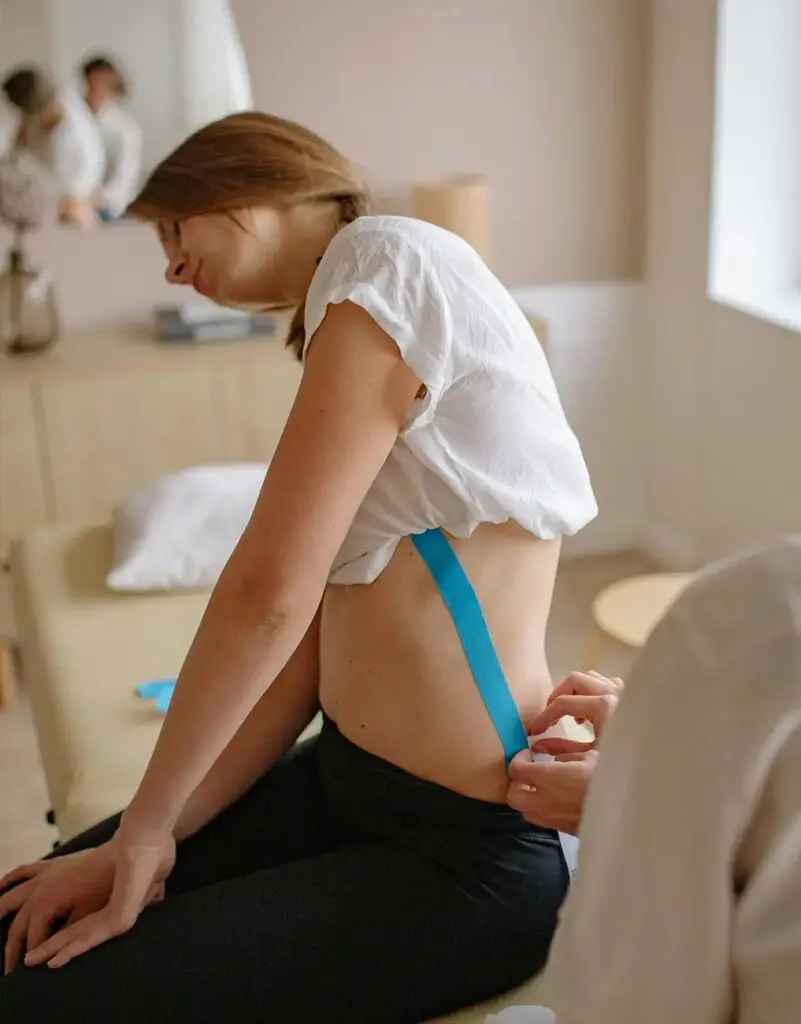
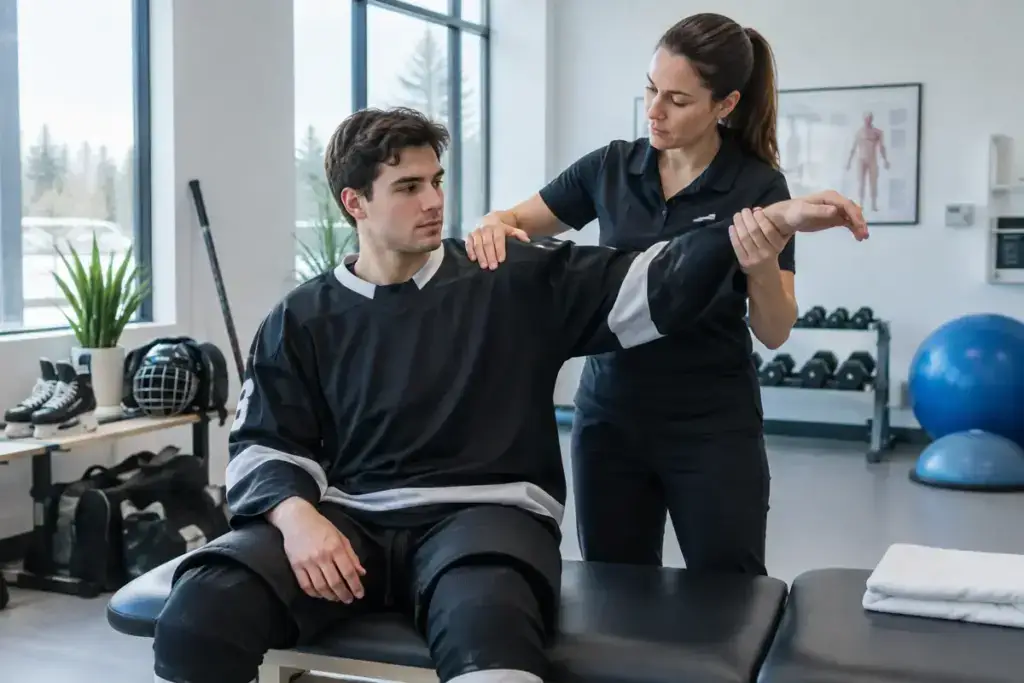
A Certified Athletic Therapist, or CAT(C), specializes in injuries to muscles, joints and bones, especially in active people. You’ll often see them behind the bench at games, but many also work in clinics.
According to the Canadian Athletic Therapists Association, athletic therapists are trained in emergency and on-field care, injury assessment, rehabilitation and reconditioning, and preventing future injuries. To be certified, they need a university degree, an accredited athletic therapy program with hands-on field and clinic training, and a national certification exam.
In short, an athletic therapist can be there from the moment you get hurt right through to your first game back.
Common Hockey Injuries Athletic Therapists Treat
Hockey groin strain
Your groin muscles, on the inside of your thigh, work hard every time you push off in your stride. They’re stretched and loaded at the same time, which is when muscles are most likely to strain. Groin strains often happen during a hard first stride, a quick stop or a sudden split.
The good news is that the right strength work can help prevent them. In a trial of 35 semi-pro soccer teams, players who did one groin exercise, the Copenhagen adduction, had 41% lower odds of groin problems over the season. That was in soccer, but the demands on the groin are similar.
Hockey shoulder injury
Shoulder injuries often come from falling onto the shoulder or getting checked into the boards. One of the most common is an AC joint sprain, sometimes called a separated shoulder. It’s an injury to the joint where your collarbone meets the top of your shoulder. Milder sprains usually recover well with rest from contact and a gradual strengthening program. More severe ones may need a doctor’s opinion.
Skate bite and ankle pain
Skate bite, also called lace bite, is pain and swelling at the front of the ankle. It happens when the stiff tongue of the skate presses on the tendons there. It’s common with new, stiff skates, or when laces are cranked tight.
An athletic therapist can calm the irritated area and suggest practical fixes. These might include a different lacing pattern, padding under the tongue, or breaking skates in gradually.
The Stages of Recovery From a Hockey Injury
Every injury is different, but recovery usually moves through the same broad stages. You move on when you meet the goals of each stage, not just when a set number of days has passed.
Stage 1: Protect and calm it down
Right after an injury, the goal is to protect the area while it starts to heal. That might mean a sling for a shoulder, padding for skate bite or easing off skating for a groin strain. You’ll keep the rest of your body moving with exercises that don’t irritate the injury.
Stage 2: Get it moving again
As pain settles, the focus shifts to restoring normal movement. Gentle range-of-motion work helps the joint and muscles move freely without guarding.
Stage 3: Rebuild strength
Now you load the injured area so it becomes strong enough for hockey. For a groin strain, that could mean squeeze exercises leading up to the Copenhagen. For a shoulder, it might be band work progressing to push-ups and pressing.
Stage 4: Train like a hockey player
This stage brings back speed, power and agility. You’ll do drills that match the demands of your position, from explosive starts and crossovers to puck battles and shooting.
Stage 5: Return to play
Once you’ve passed your testing and feel confident, you return to practice, then contact, then games. Many athletes also keep a few key exercises in their routine to lower the chance of reinjury.
What Athletic Therapists Look At Before Return to Play
Feeling good isn’t always the same as being ready. Pain can settle well before strength and control are back. That’s why athletic therapists use objective tests, which give real numbers to compare over time and against your uninjured side.
Testing might include:
| What’s tested | How it’s often checked | Why it matters |
|---|---|---|
| Strength | A handheld device that measures how hard you can push or squeeze | Shows whether the injured side has caught up |
| Maximum strength (isokinetic dynamometry) | A computerized machine that moves your limb at a set, steady speed while you push or pull as hard as you can, measuring the maximum torque (turning force) your muscles produce | Gives a precise, side-by-side comparison of strength through the whole movement, and between muscle groups like the front and back of the thigh |
| Groin strength | A squeeze test with a device or ball between your knees | Tracks groin recovery, a key area for hockey players |
| Range of motion | Measuring how far a joint moves | Makes sure stiffness won’t hold you back or shift stress elsewhere |
| Balance and control | Single-leg balance and reach tests | Checks stability for quick cuts and battles |
| Power | Hop and jump tests | Shows whether you can produce force fast, like an explosive stride |
| On-ice skills | Skating, stops, crossovers and shooting drills | Confirms you can handle real hockey demands |
How you feel matters too. Confidence and trust in the injured area are part of being ready.
Return to Play After a Hockey Injury: Step by Step
Getting back on the ice happens in stages, with a check at each step before moving on. A typical return-to-play plan looks like this:
- You skate on your own at an easy pace, focusing on smooth strides and turns.
- You add harder skating, with sprints, quick starts, hard stops and crossovers.
- You join non-contact practice, including passing, shooting and team drills.
- You take part in full-contact practice, with battles along the boards and body contact.
- You return to games, sometimes with limited ice time at first.
If pain or swelling flares up at any step, you take a step back, settle things down and try again. Your athletic therapist will guide the pace and keep coaches and parents in the loop.
Concussions are different. They follow their own separate return-to-learn and return-to-sport steps, including medical clearance before contact.
The Bottom Line on Hockey Injury Athletic Therapy
Here’s a quick recap:
- Athletic therapists are trained to care for injuries from the bench to full recovery.
- Groin strains, shoulder injuries and skate bite are among the most common hockey problems.
- Recovery moves through stages, and you progress when you meet each goal.
- Objective testing helps show when you’re truly ready, not just pain-free.
- Return to play steps up from solo skating to contact to games, and concussions follow their own protocol.
If an injury has you sidelined, or you want to stay ahead of one this season, our athletic therapists in Ajax are here to help players across Durham Region. Book an assessment, and we’ll build a plan to get you back to the game you love.
References
Canadian Athletic Therapists Association. (n.d.). Athletic therapy [Brochure]. https://athletictherapy.org/public/Public%20Resources/CATA%20General%20Brochure%20EN%20-%20FINAL.pdf
Harøy, J., Clarsen, B., Wiger, E. G., Øyen, M. G., Serner, A., Thorborg, K., Hölmich, P., Andersen, T. E., & Bahr, R. (2019). The Adductor Strengthening Programme prevents groin problems among male football players: A cluster-randomised controlled trial. British Journal of Sports Medicine, 53(3), 150–157. https://doi.org/10.1136/bjsports-2017-098937